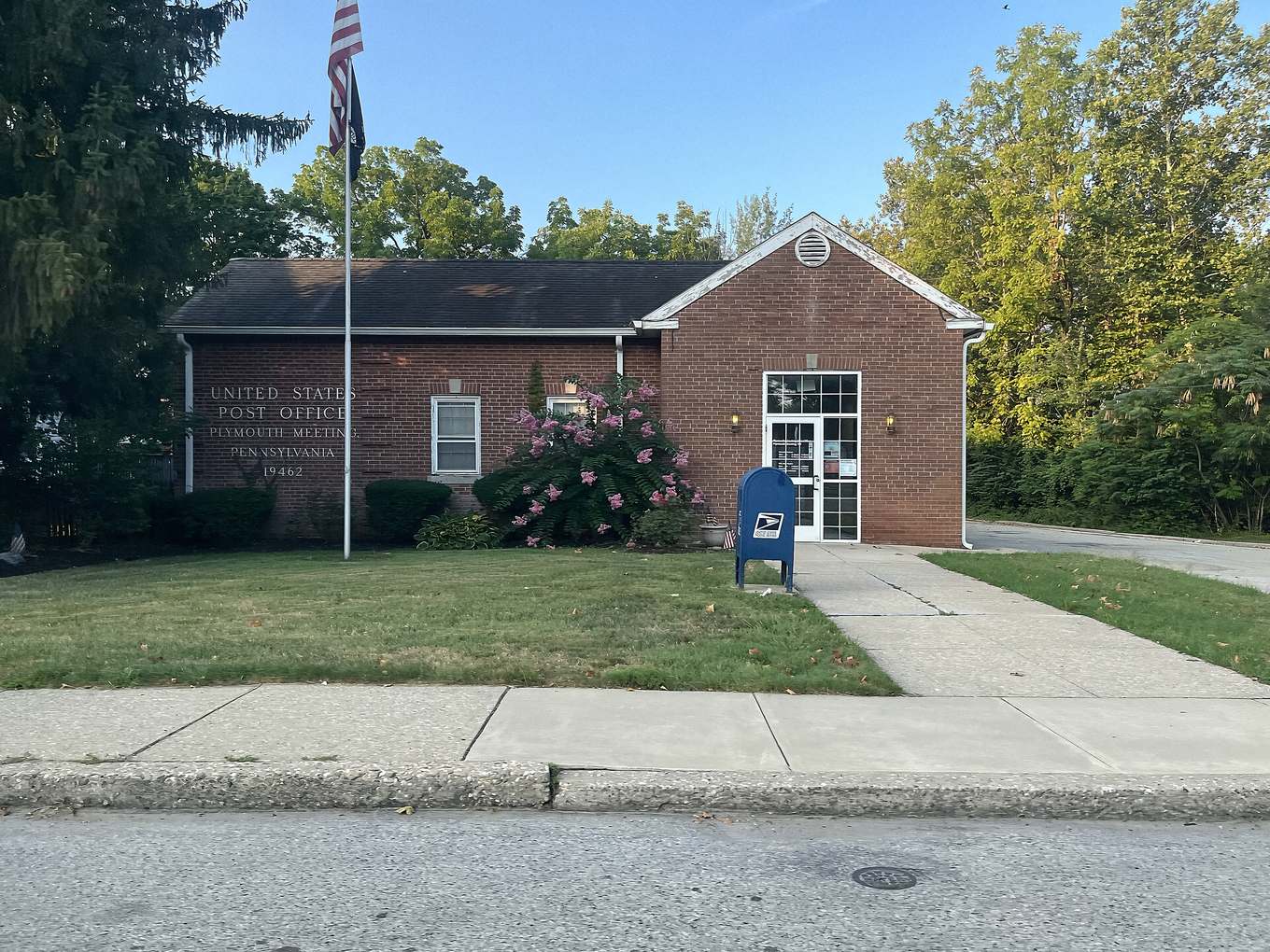
One address, two townships
Plymouth Meeting is a census-designated place that sits in Plymouth Township and Whitemarsh Township at the same time. It holds 7,452 people, up 20.6% since 2010. Quakers from Devon founded it in 1686; the Plymouth Friends Meetinghouse went up in 1708.
The two townships are not interchangeable. Plymouth Township has 18,256 people and has been home rule since 1976; Whitemarsh Township has 19,707. A Plymouth Meeting house can be in either, and the municipal millage differs — 3.8 against 2.3633 — so the township belongs in the first sentence of any conversation about the payment.
The school district works the other way, and cleanly. Colonial School District covers all of the CDP, both township sides, plus Conshohocken Borough: about 5,600 students, ending at Plymouth Whitemarsh High School, with the district office just south of here in Whitemarsh. The split that divides the tax bill does not divide the schools.
The tax bill that follows
Both sides carry 5.462 mills of county tax, 0.49 for Montgomery County Community College and Colonial’s 27.422 for 2026-27. The township is what changes. On the Plymouth Township side that is 3.8 mills for a total of 37.174, with the municipal bill dated 1 February 2026. On the Whitemarsh side it is 2.3633 for a total of 35.7373, billed 1 March 2026. The school bill lands 1 July either way (the county’s 2026 millage sheet, read 26 August 2026). Whitemarsh publishes its own worked example: a property assessed at $200,000 owes the township $476.
Assessments here are 1996 values — Montgomery County has not reassessed countywide since then — and the state’s Common Level Ratio factor for deeds dated 1 July 2026 through 30 June 2027 is 3.36, so assessed value runs near 30% of market. A $600,000 house is therefore likely assessed near $178,600. Plymouth’s 37.174 mills on that is roughly $6,638 a year; Whitemarsh’s 35.7373 is roughly $6,381. About $257 apart, which is less than most people expect from a township line, and the reason is the shared school district. Both are estimates; the seller’s bill is the better evidence.
The earned income tax opens the wider gap. A Plymouth Township resident pays 1.10% — 0.60% township and 0.50% Colonial — while a Whitemarsh resident pays 1.25%, the township taking 0.75%. Plymouth also charges a $52 local services tax, and its council sets the real estate rate each December. Colonial’s homestead exclusion was published at $469 per homestead for 2025-26, school tax only, applications to the county assessment office by 1 March.
Transfer tax does not care which side you are on: 2.000% at both, and at every other Montgomery County address. Plymouth Township publishes the split itself — 1% to the Commonwealth, 0.5% to Colonial School District, 0.5% to the township.
The houses
The age distribution is two-humped and unusual. Median year built is 1976, but 23.5% of units went up in the 1950s and another 15.2% between 2010 and 2019, with 2.3% since 2020. 46.5% are detached and only 7.8% attached. Owner-occupancy is 56.8%, and the ACS median owner-estimated value is $512,500 (Census ACS 2020–2024 five-year).
The number that shapes loan files is 28.7% — the share of units in buildings of fifty or more. That is what the 2010s wave was. Only 5.5% of households heat with oil, so tanks are a smaller question here than they are up the county.
Split by township, the two sides read as different markets under one name. Plymouth: median year built 1966, median owner-estimated value $457,800, 52.2% detached, 10.0% on oil, 66.9% owner-occupied. Whitemarsh: 1973, $570,100, 58.7% detached, 8.6% on oil, 74.0% owner-occupied.
There is old fabric too: the Plymouth Meeting Historic District, listed on the National Register on 18 February 1971, carries 56 contributing buildings from about 1708 to 1935 and straddles both townships.
On price, check the geography first. Movoto shows a $643,499 sold median for the Plymouth Meeting area in July 2026 on 33 sales, down from 62 a year earlier, and 25 days on market against 13. That is a ZIP 19462 figure, mostly Plymouth Township, and the volume drop says more than the median does.
What a lender will ask about here
Condominium warrantability, and it comes up often. With nearly three in ten units in a large building, the project gets reviewed alongside the borrower: budget and reserves, insurance, owner-occupancy share, litigation, and how much of the building one owner controls. Request the resale packet the day the offer is accepted; it is usually the slowest document in the folder.
Then the township, because it decides the municipal rate, the earned income rate and the bill date.
Flood is a smaller story here than the county’s rivers suggest. Plymouth Meeting sits on the ridge above the Schuylkill; the flood plain runs along the Spring Mill edge of Whitemarsh and along Plymouth Creek. Pull the FEMA map for the parcel and let it answer, because Norristown’s flood record does not travel up the hill.
One live file is worth reading before you sign: a data center application at 900 Conshohocken Road in Plymouth Township. The applicant sought a special exception, then filed a validity challenge on 21 July 2026; the Zoning Hearing Board has taken it up three times since June, and the township opened a dedicated information page on 7 August 2026 stating that it does not support, endorse, validate or otherwise legitimise any documents the applicant has submitted.
Commuting: no Regional Rail station sits in Plymouth Township, and the Manayunk/Norristown Line runs through without stopping. Conshohocken station, reopened 6 November 2023, is accessible and has 95 parking spaces, which is not many; a 7:57 departure there reaches Suburban Station at 8:37. Interstate 476 meets Interstate 276 here.
Next town over
Blue Bell is the same problem in a different shape. Norristown is the nearest full transit center and the county’s highest municipal rate. Montgomery County holds the transfer tax and assessment arithmetic.
What to do next
Start with the deed: Plymouth Township or Whitemarsh Township, and whether the property is a condominium. Add the price and what you have set aside, and a licensed Pennsylvania mortgage lender calls you back, usually the same working day, with the right side’s millage and the association question already on the list. Call the number at the top, or put the details in the form and send it along. Two townships, one school district, and the estimate ought to say which side you are on.